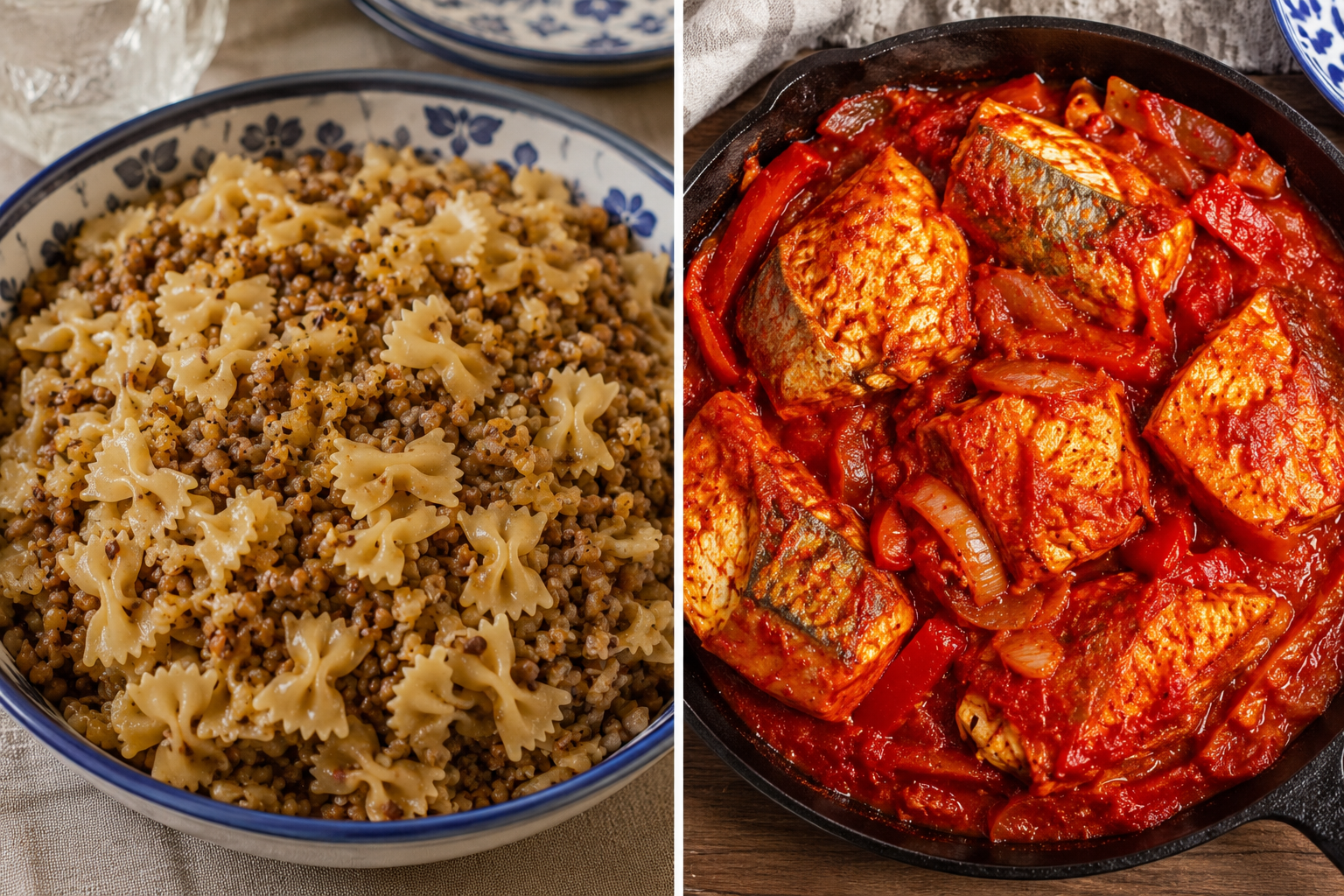
I’ll admit it: Ashkenazi food isn’t exactly thrilling. Kugel, gefilte fish, matzah ball soup, kasha varnishkes—these foods aren’t trying to impress anyone. They’re beige. Soft. Sometimes overcooked. But they’re comforting in a way that’s hard to explain unless you grew up with them. Ashkenazi food feels like safety. It’s food shaped by generations of Jews who survived cold climates, poverty, persecution, and scarcity in Eastern Europe. The recipes relied on whatever ingredients were cheap and available. Sephardi food, by contrast, feels bold and layered. The spices, herbs, peppers, citrus, and slow-cooked meats create dishes that command attention. It’s exciting food. But to me, it doesn’t always deliver the same emotional comfort as a simple bowl of chicken soup made the way your grandmother made it.
But there’s another way to look at this. Maybe Sephardi food is comforting precisely because it is so rich in flavor and tradition. Sephardi Jews also endured oppression, discrimination, expulsions, and hardship across the Middle East, North Africa, and beyond. Their cuisine wasn’t born from luxury. It was shaped by local ingredients, trade routes, warmer climates, and centuries of adapting under difficult conditions. What Ashkenazi Jews created with potatoes, onions, and schmaltz, Sephardi Jews created with cumin, turmeric, olive oil, peppers, and fresh herbs. The result is food that can feel vibrant and deeply grounding at the same time. Meanwhile, Ashkenazi cuisine can sometimes seem repetitive or overly heavy to people who didn’t grow up with it.
In the end, Jewish food tells the story of Jewish survival in different corners of the world. Ashkenazi cuisine reflects endurance through scarcity and harsh conditions. Sephardi cuisine reflects adaptation to entirely different environments and influences. One leans toward simplicity and restraint; the other toward intensity and spice. Neither came from ease. Both came from Jewish communities finding ways to preserve identity, family, and faith through food. And maybe that’s the real beauty of the Jewish table: there’s room for both the humble kugel and the fiery chraimeh, the soft matzah ball and the spicy kubbeh. Different flavors, different histories—but the same Jewish instinct to turn survival into tradition.